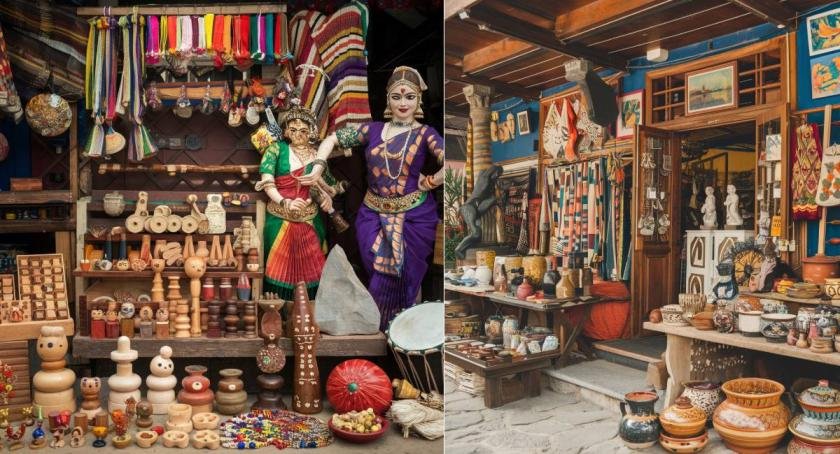
Odisha is famous for its rich culture, traditional art, and beautiful handicrafts. The state has a long history of skilled artisans who create amazing handmade products using traditional techniques passed down from generation to generation. From beautiful Pattachitra paintings and silver filigree to stone carvings, handloom sarees, and handmade decorations, Odisha has a lot to offer.
In this blog, we will explore the Top 10 Best Places to Discover Odisha Handicrafts, where you can see the beauty of traditional art, meet talented local artisans, and learn about the history behind these crafts. Whether you are an art lover, a tourist, or someone who loves handmade products, these places will give you a chance to experience the real beauty of Odisha’s culture and traditions.
1. Raghurajpur
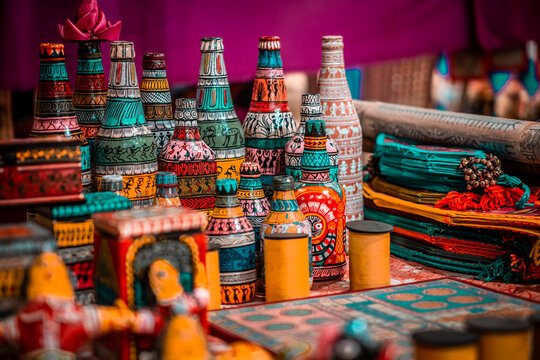
Odisha has a rich tradition of handicrafts and traditional arts.
- Handicrafts are closely connected with Odisha’s:
- Culture
- Spirituality
- Festivals
- Daily life
- Local communities
- Major handicrafts include:
- Pattachitra
- Pipili Appliqué
- Silver Filigree / Tarakasi
- Dhokra
- Stone carving
- Wood craft
- Terracotta
- Horn work
- Papier-mâché
- Traditional textiles
The Art of Pattachitra
- Pattachitra is one of Odisha’s most famous traditional art forms.
- The word Pattachitra comes from:
- Patta – cloth
- Chitra – painting
- Pattachitra is strongly associated with Raghurajpur near Puri.
- Common themes include:
- Hindu mythology
- Religious stories
- Lord Jagannath traditions
- Odisha’s cultural heritage
- The art is known for:
- Detailed compositions
- Vibrant colours
- Decorative borders
- Fine artistic details
- Artists also create artwork on:
- Palm leaves
- Tussar silk
- Other traditional surfaces
Raghurajpur – A Village of Artists
- Raghurajpur is located approximately 12 km from Puri.
- It is famous for its Pattachitra tradition.
- The village has around 120 traditional homes arranged in two rows.
- Many artisans work directly from their homes.
- The village itself functions as a living craft environment.
- Visitors can:
- Meet local artisans
- See artwork being created
- Learn about traditional techniques
- Purchase handmade products
- Other crafts found in Raghurajpur include:
- Palm-leaf engraving
- Papier-mâché
- Wood toys
- Stone toys
- Traditional paintings
Raghurajpur ₹23.82 Crore Development Project
- Location: Raghurajpur, Puri, Odisha
- Reported project amount: Approximately ₹23.82 crore
- The project focuses on improving tourism and heritage infrastructure.
- Key objectives include:
- Improving visitor facilities
- Supporting cultural tourism
- Promoting local handicrafts
- Supporting artisan communities
- Preserving the village’s heritage character
- Raghurajpur is particularly known for:
- Pattachitra
- Palm-leaf engraving
- Wood carving
- Stone carving
- The village is also associated with Gotipua, a traditional performing art of Odisha.
- Raghurajpur received Best Tourism Village 2023 – Silver Category recognition.
- The broader vision is to connect:
- Heritage
- Handicrafts
- Tourism
- Artisan livelihoods
- Modern visitor infrastructure
2. pipili
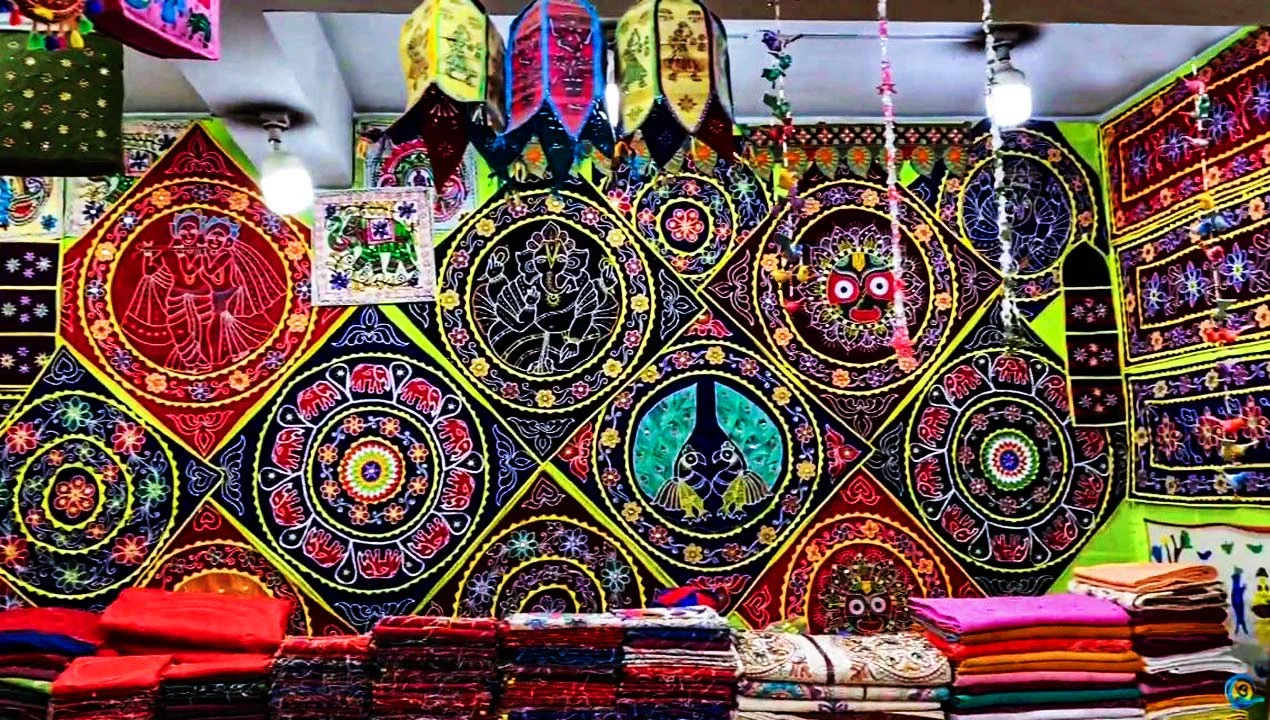
- Pipili is a historic village in Odisha, traditionally known for its skilled tailoring and appliqué artisans.
- It is famous for its colourful Appliqué work, locally known as Chandua.
- The craft is closely associated with the cultural and religious traditions of Lord Jagannath.
History of Appliqué Work
- The appliqué tradition of Pipili dates back to the 12th century AD.
- It developed as a temple craft associated with Lord Jagannath.
- Historical records from 1054 AD mention special servants (Sevaks) appointed by the king.
- These artisans were involved in making:
- Appliqué canopies
- Decorative umbrellas
- Lanterns
- Other items used in temple rituals
- The craft continues to play an important role in the Jagannath Temple’s daily rituals.
- Pipili’s appliqué work is also associated with the famous Rath Yatra procession.
How Appliqué Work Is Made
- Artisans begin with brightly coloured pieces of cloth.
- The cloth is carefully cut into different decorative shapes.
- Common designs include:
- Creepers
- Lotus flowers
- Sun motifs
- Half-moon designs
- Other traditional patterns
- These colourful shapes are stitched onto a base cloth.
- Different types of stitches are used for different purposes:
- Running stitch – for simple sewing and attaching pieces.
- Buttonhole stitch – for creating strong and neat edges.
- Satin stitch – for smooth and shiny filling.
- The combination of colourful fabrics, traditional motifs and detailed stitching gives Chandua its distinctive decorative appearance.
3. CUTTACK
Silver City & Silver Craft
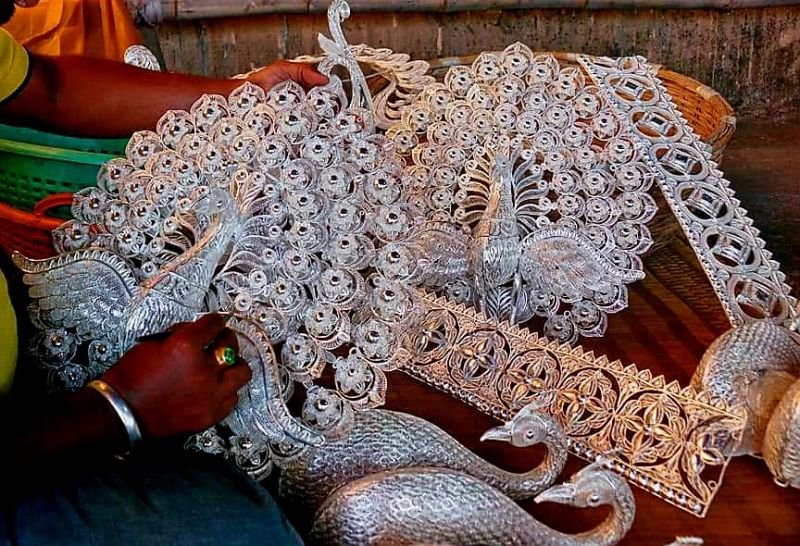
- Cuttack is widely known for its beautiful silver filigree, locally called Tarakasi.
- Tarakasi involves creating delicate decorative designs using very fine silver wires.
- Skilled artisans transform silver into jewellery, decorative objects and traditional artistic designs.
- The craft represents the creativity and craftsmanship passed down through generations.
- Cuttack’s Nayasadak area is well known for shops selling silver filigree products.
Chandi Medha
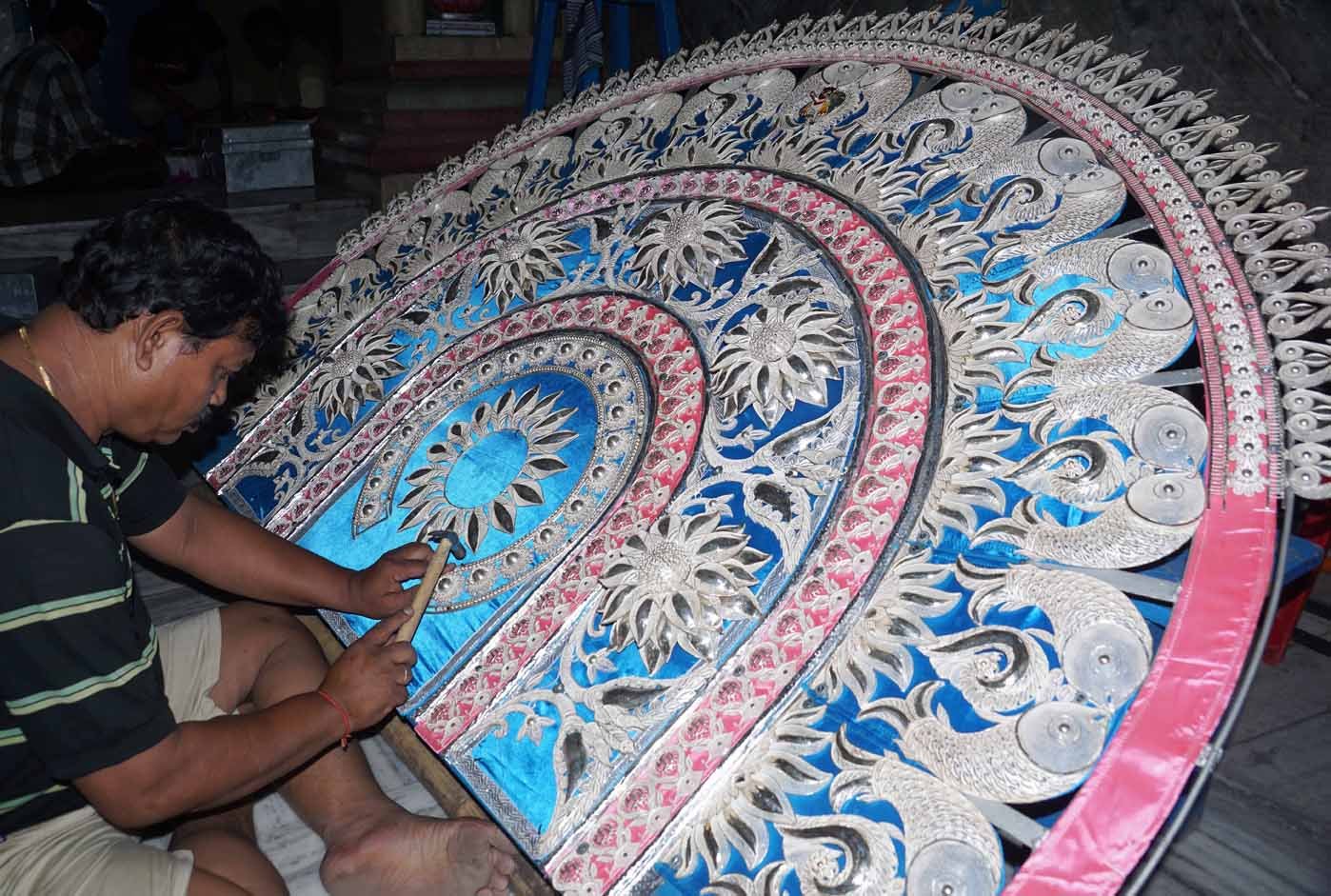
- Chandi Medha refers to the magnificent silver backdrops and decorations associated with Durga Puja in Cuttack.
- During Durga Puja, several puja committees decorate the idols and pandals with elaborate silver work.
- The silver decorations create a distinctive and spectacular appearance during the festival.
- Cuttack’s Durga Puja is particularly known for its silver backdrops and gold ornaments.
- The intricate designs demonstrate the skill and artistic precision of Cuttack’s traditional craftsmen.
- Chandi Medha has become an important part of Cuttack’s cultural and festive identity.
4. BADABOURSINGH & RANASINGHPUR
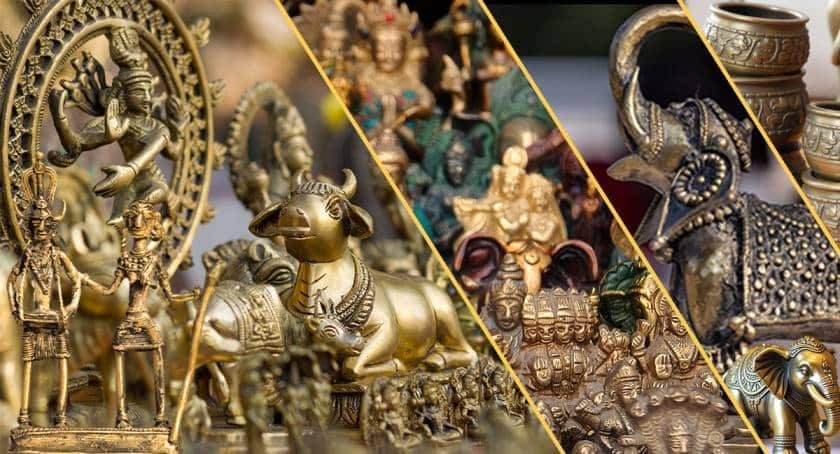
- Around 4,500 years old tribal metal-casting tradition.
- It is associated with traditional tribal metal craftsmanship.
- The craft is especially famous for Dhokra metal casting.
Famous Craft – Dhokra
- Dhokra is a traditional metal-casting craft of Odisha.
- In Odisha, Dhokra is practiced by tribal communities.
- It is primarily practiced by the Sethia and Thathera tribes.
- These communities are traditionally known as nomadic metal workers.
- The name “Dhokra” comes from the Dhokra Damar tribe, a nomadic group.
- The Dhokra tradition spread across:
- Odisha
- Bengal
- Jharkhand
- Chhattisgarh
- These communities have carried this ancient metal-casting knowledge across generations.
- Dhokra is known for its traditional craftsmanship and handmade metal figures.
5. TALABASTA &RAJNAGAR
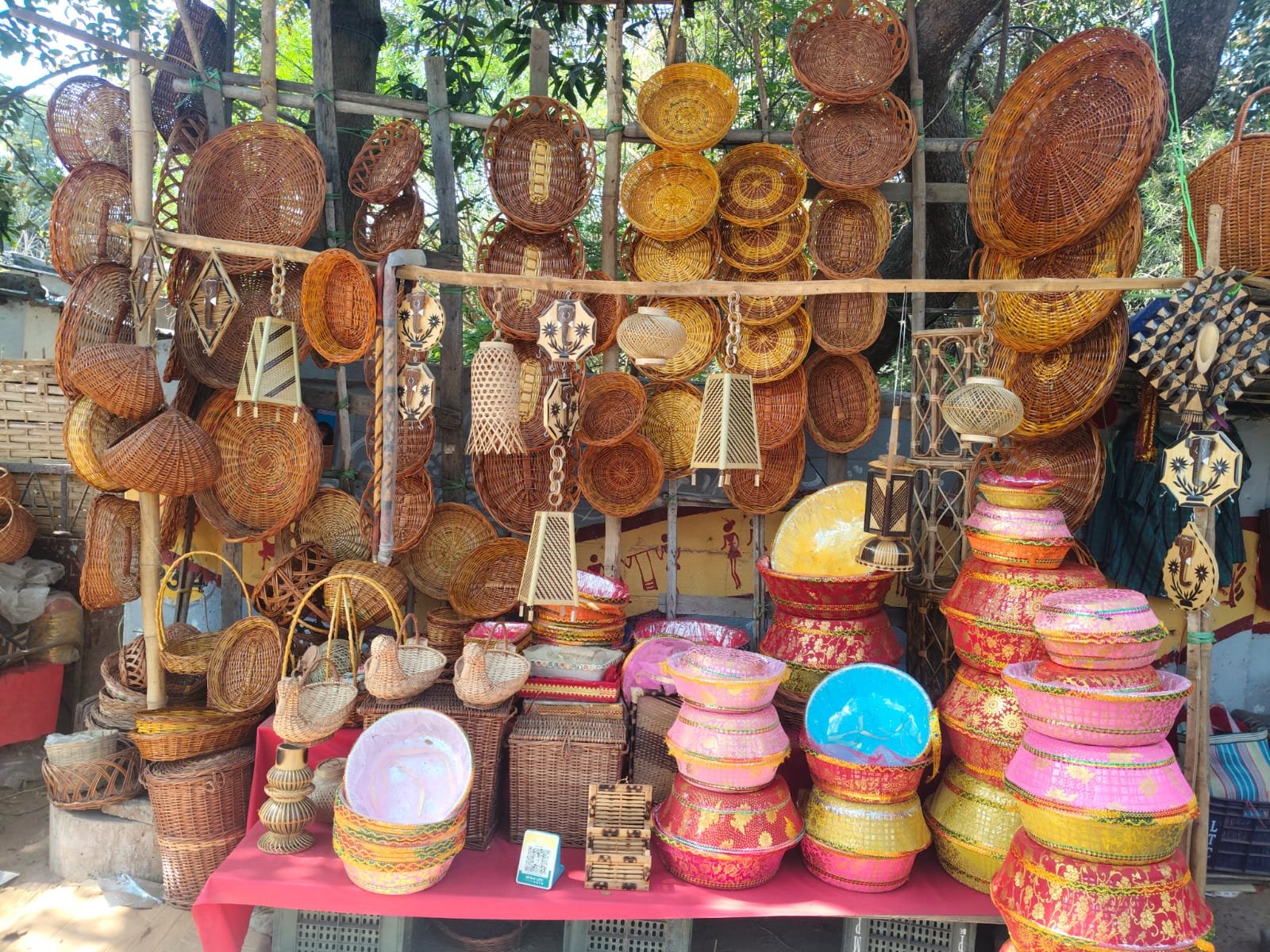
Talabasta & Rajnagar – Bamboo Weaving Villages
- Location: Talabasta & Rajnagar
- Famous for: Cane & Bamboo Craft
- Main craft: Bamboo weaving
- Long strips are cut from bamboo or cane plants.
- These strips are soaked in water to make them flexible.
- The flexible strips are then woven in criss-cross patterns.
- The edges are tied tightly so that the woven products do not open or come apart.
- Artisans create many useful and decorative products, such as:
- Baskets of different sizes
- Hand fans
- Cots
- Table mats
- Floor mats
- Wall hangings
- Lampshades
- These bamboo and cane products are:
- Economical
- Beautifully crafted
- Useful for everyday life
- Made through traditional weaving techniques
Other Famous Craft Villages
- Tarato: Famous for Sikki / Kaincha Craft.
- Lehnapur: Famous for Stone Carving.
- Lalitgiri: Also mentioned as a place famous for Stone Carving.
6. GANJAM DISTRICT & BOMKAI VILLAGE
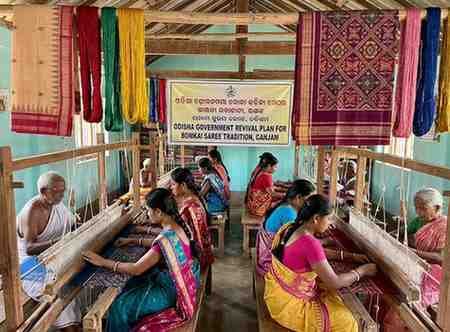
Bomkai Village
- Known for: Bomkai Saree and Berhampur Patta.
- Bomkai village is known as the place where the Bomkai Saree got its name.
- Special technique: Threads are tie-dyed before weaving.
- This tie-dye technique is known as Bandha / Ikat technique.
- The dyed threads are woven on pit looms.
- Jala (Dobby) technique is used during weaving.
- Bomkai sarees feature beautiful tribal motifs.
- Common motifs include:
- Bitter gourd
- Pestles
- Peacock
- Small fish
Bellaguntha
- Known as: The flexible brass fish village.
- Famous for: Flexible Brass Fish.
- The brass fish is made using a special casting technique.
- The fish’s body parts are loosely connected.
- This special construction allows the fish to bend and move.
- Making the joints requires extraordinary skill.
- The joints need to be:
- Loose enough to allow movement.
- Tight enough to hold the fish together.
- The finished brass fish has a unique flexible and movable structure.
7. BALASORE
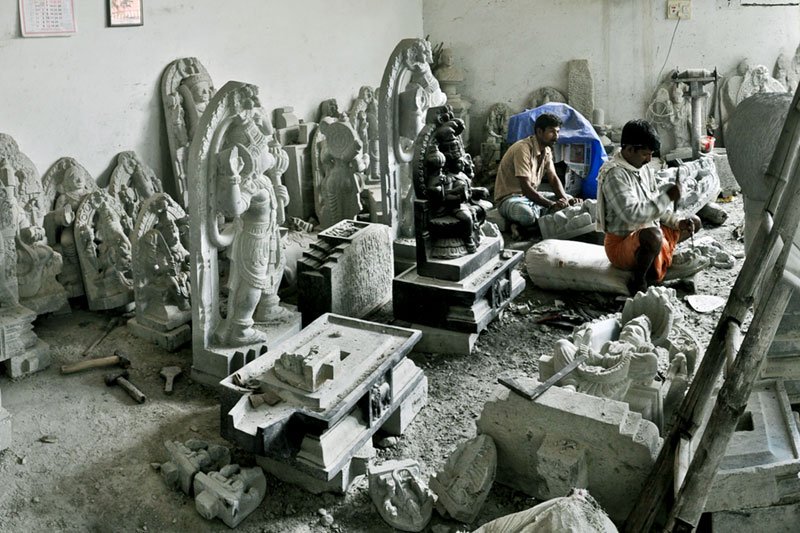
Balasore (Baleswar) District – Stone Carving
- Location: Balasore (Baleswar) District, Odisha
- Famous for: Stone carving
- Stone Carving Hub: Soro, Baulagadia, Nilagiri
- Nilagiri: Known as a temple artisan village
- Main Craft: Stone carving
- Materials used by artisans:
- Granite
- Sandstone
- Soapstone
- Tools used:
- Chisels
- Hammers
- Products created by artisans:
- Temple models
- Deity replicas
- Decorative items
- Craft style: Detailed carving and traditional temple-inspired designs
Kantabania – Paddy Grain Art
- Location: Kantabania
- Known for: Paddy grain art
- Famous for: Paddy craft
- Artisans: Known for creating decorative artwork using paddy grains
- Process:
- Paddy grains are generally dyed in different colours.
- Natural or chemical dyes are used for colouring.
- The coloured grains are arranged in different patterns.
- The grains are then glued together.
- Products created:
- Decorative items
- Wall hangings
- Figurines
8. SAMBALPUR
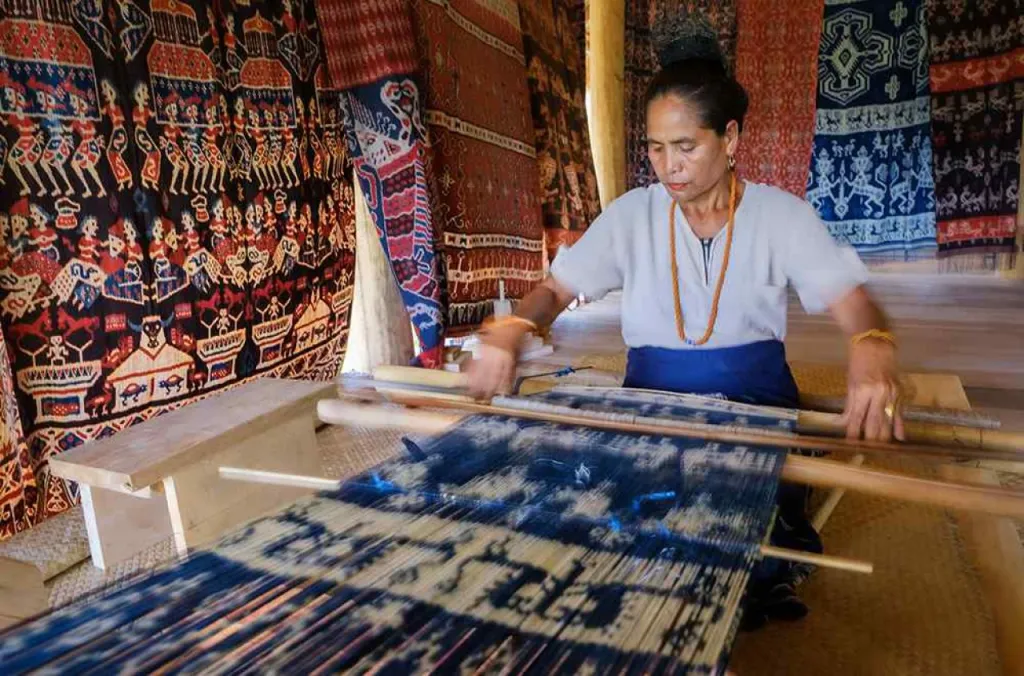
Sambalpur Town
- Sambalpur is known for its 800 years of Bandha weaving tradition.
- It is famous for Sambalpuri Bandha sarees.
Bandha Technique
- The Bandha technique is an extremely labour-intensive process.
- Before weaving, the threads are tied in precise patterns.
- A protective material is used to prevent the tied portions from absorbing dye.
- The tied threads are then dyed.
- After dyeing, the ties are removed.
- The threads reveal beautiful coloured patterns after the ties are removed.
Sambalpuri Sarees
- The dyed threads are woven on handlooms.
- They are used to create sarees with intricate designs.
- Sambalpuri sarees feature traditional motifs such as:
- Conch shell (Shankha)
- Flowers
- Animals
- Other traditional motifs
- Sambalpuri Bandha weaving is an important part of Odisha’s traditional textile heritage.
9. B0LANGIR
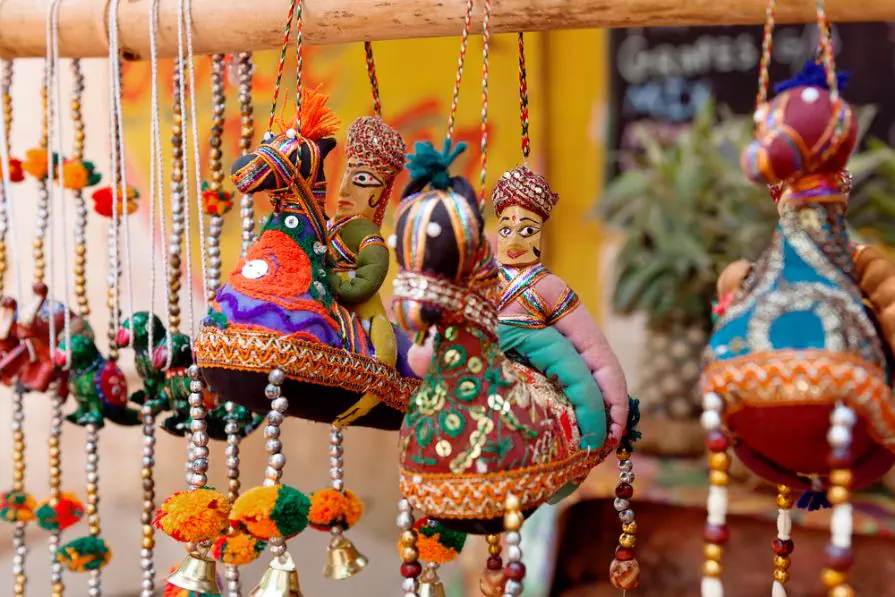
Famous for: Appliqué Work (Chandua)
- Appliqué work is similar to Pipili appliqué work.
- Colourful cloth is cut into different shapes.
- These shapes are stitched onto a base cloth.
- Different types of stitches are used to decorate the cloth.
- Common appliqué products include:
- Wall hangings
- Umbrellas
- Bags
- Decorative items
- Common designs/motifs include:
- Peacock
- Elephant
- Flowers
Famous for: Terracotta
- Terracotta is made using red clay.
- The clay is collected from riverbanks.
- Clay is mixed with water and kneaded like dough.
- The clay is shaped on a spinning wheel.
- Different items are made, such as:
- Pots
- Lamps
- Figurines
- The items are dried in shade for 2–3 days.
- After drying, they are baked in a hot kiln.
- Baking makes the terracotta items hard and durable.
10. KHORDHA
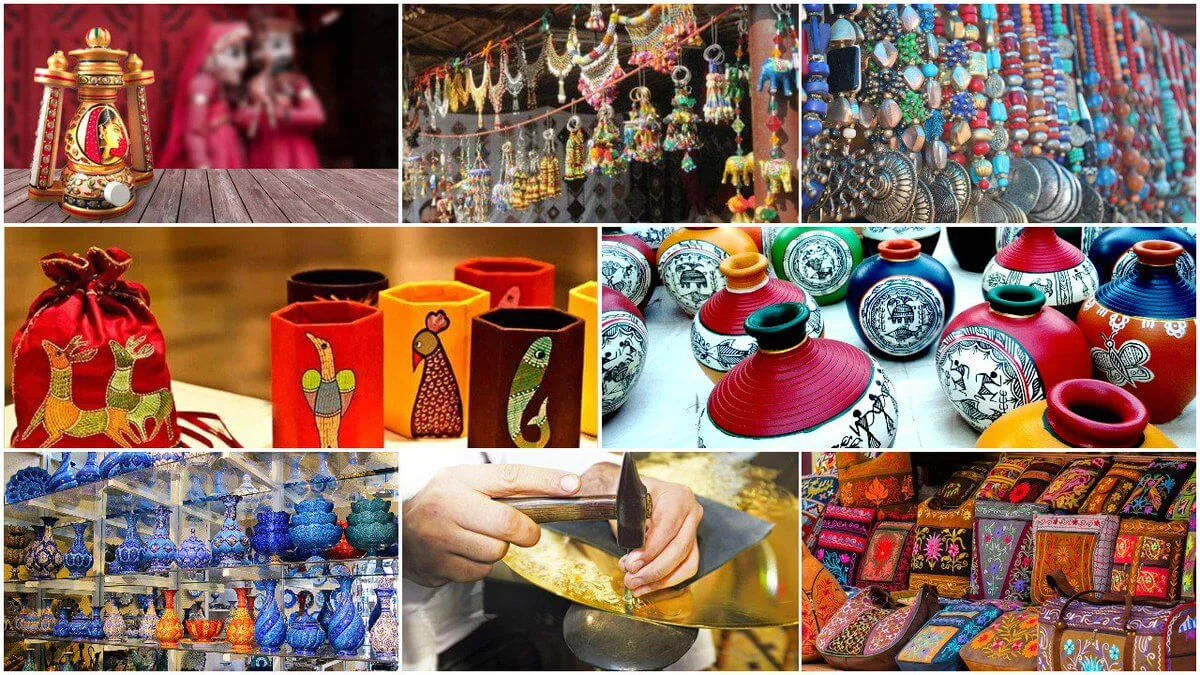
Appliqué Work – Delanga, Shankarsahi & Banamalipur
- Khordha district is known for Appliqué work.
- Important places include:
- Delanga
- Shankarsahi
- Banamalipur
- The work is similar to Pipili Appliqué work.
- Colourful cloth is cut into different shapes and designs.
- These coloured cloth pieces are stitched onto a base cloth.
- Different types of stitches are used to create attractive designs.
- The appliqué work is mainly known for its colourful patterns and decorative designs.
Chandua – Famous Fort
- Chandua is mentioned as a famous fort in the notes.
- It is associated with the traditional appliqué-related craft tradition of the region.
Palm Leaf Engraving – Khamangasasan & Kakurudrapur/Kenduli
- Khamangasasan and Kakurudrapur/Kenduli are known for palm leaf engraving.
- The craft involves engraving pictures and text on palm leaves.
- Young palm leaves are first collected/plucked.
- The leaves are treated using sun and smoke to preserve them.
- After preservation, the leaves are cut into long strips.
- Artists engrave pictures and text on the palm leaves.
- A sharp metal needle is used for engraving.
- Lamp black is rubbed over the engraved leaf.
- The lamp black makes the engraved portions turn black.
- This makes the pictures and designs clearly visible.
- The craft is therefore famous for its detailed and traditional palm leaf engraving.
Conclusion
Odisha is a beautiful state known for its rich culture, traditional art, and amazing handicrafts. The top 10 places mentioned in this blog show the beauty and uniqueness of Odisha’s traditional craftsmanship. From Pattachitra paintings and silver filigree to stone carvings and handloom sarees, every craft tells a story of our history and culture.
These handicrafts are not just handmade products; they are a symbol of the hard work, creativity, and talent of local artisans. Visiting these places helps us understand their traditions and support their livelihoods. We should preserve and promote Odisha’s handicrafts so that future generations can also enjoy and appreciate this beautiful art and cultural heritage.